Peak
Peak product overhaul
Redesigned a telehealth startup's app, brand, website and internal EHR around patient trust, working directly with the founders.
- Telehealth
- Brand
- App, web & EHR
130Calls analyzed
48%Were program questions
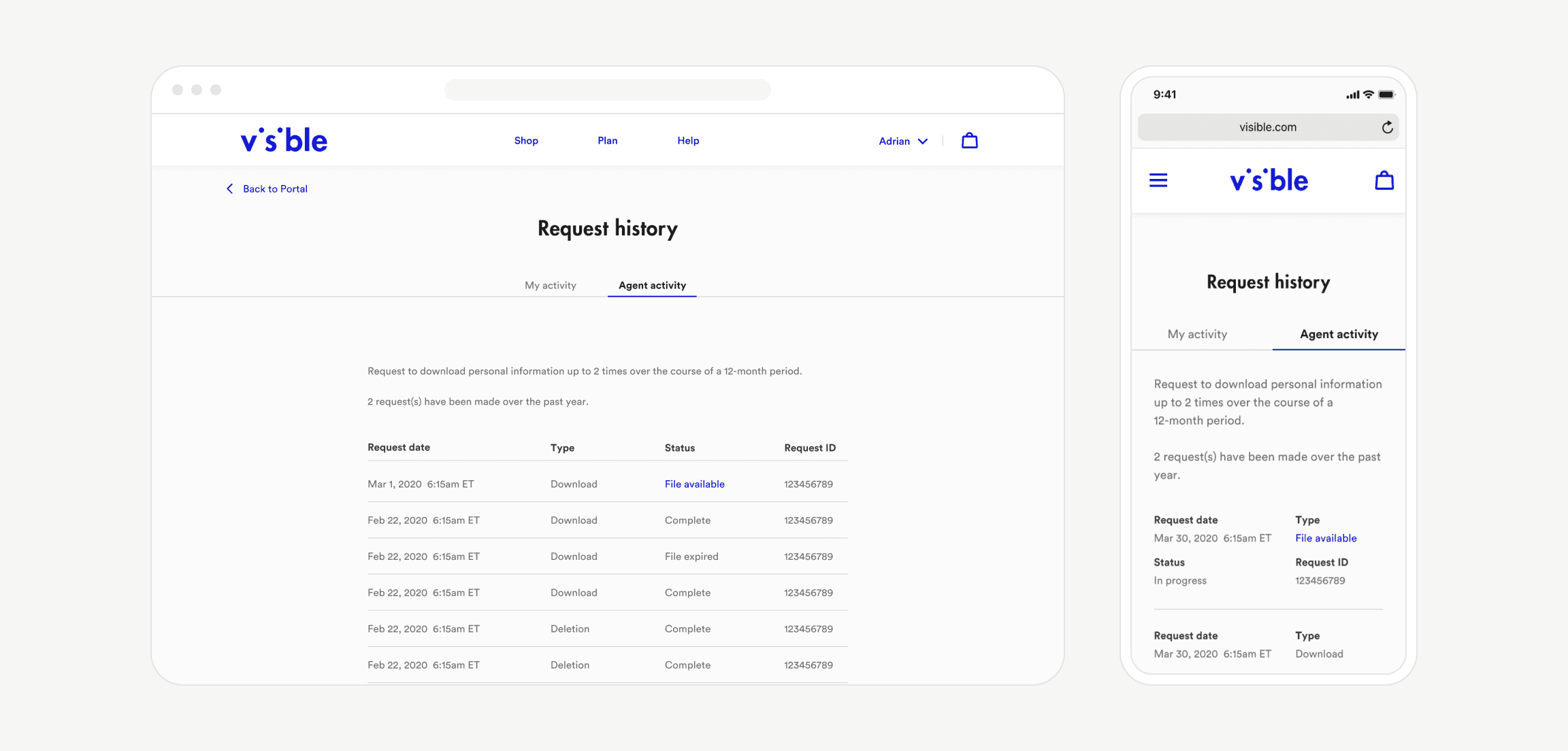
California's privacy law required Visible to give customers access to their personal data on a legal deadline. As lead designer, I argued for one national standard instead of state-by-state verification. Marketing, product, and engineering backed it, and legal raised no objection. Design landed a month early, and the portal launched in mid-December.
My contribution:
Lead designer, from scratch. I shaped strategy through conversations with marketing, legal counsel, and product, designed more than 120 screens across flows and platforms, and kept the work aligned with Verizon, Visible's parent company.
The CCPA gave customers the right to see, request, and delete the personal data a company holds on them. The legal obligations were clear. The customer experience was not.
The portal had to:
Meet legal standards.
Match Verizon's requirements as parent company.
Make sensitive controls feel safe to use.
Be live around the start of the new year.
Problem to solve
How do you present data rights, and a delete control, so people understand them and trust the company holding their data?
Early plans had customers prove their state by mailing in or scanning a license, then served a dashboard built around that state's rules. I argued for a single national experience instead.
Verification would have added friction for people who simply wanted their data.
Per-state dashboards meant keeping every state's standard as its own experience.
Verifying state would have required a third-party verification system.
California usually has the strictest version of a law, and other states tend to follow.
Marketing already had a brand effort around trust and transparency, so I proposed we lean into it. The pitch: give everyone the access CCPA requires, even where the law doesn't, as a transparency play with one experience to maintain.
How I got alignment
I sat down with a marketing director and with legal counsel, then pitched the product manager.
Loved the brand angle.
Backed the simpler scope.
Liked the reduced complexity.
Had no objection.
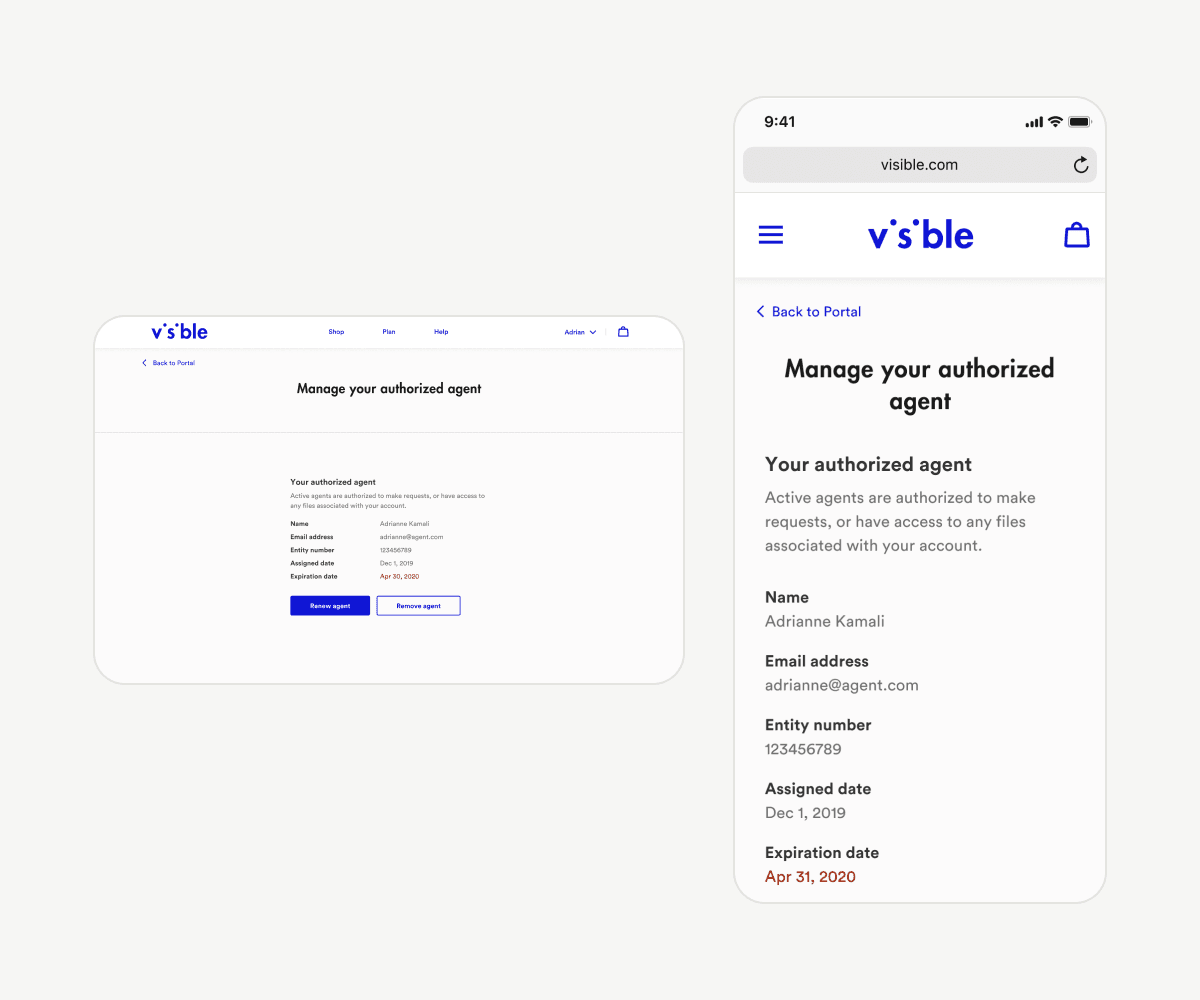
Viewing and downloading personal information, managing an authorized agent (someone acting on a customer's behalf), marketing communication preferences (allow or do not allow per channel: email, SMS, survey, social media), and request history, on desktop and mobile.
One portal, three jobs: get your data, manage who can act for you, and set marketing preferences.
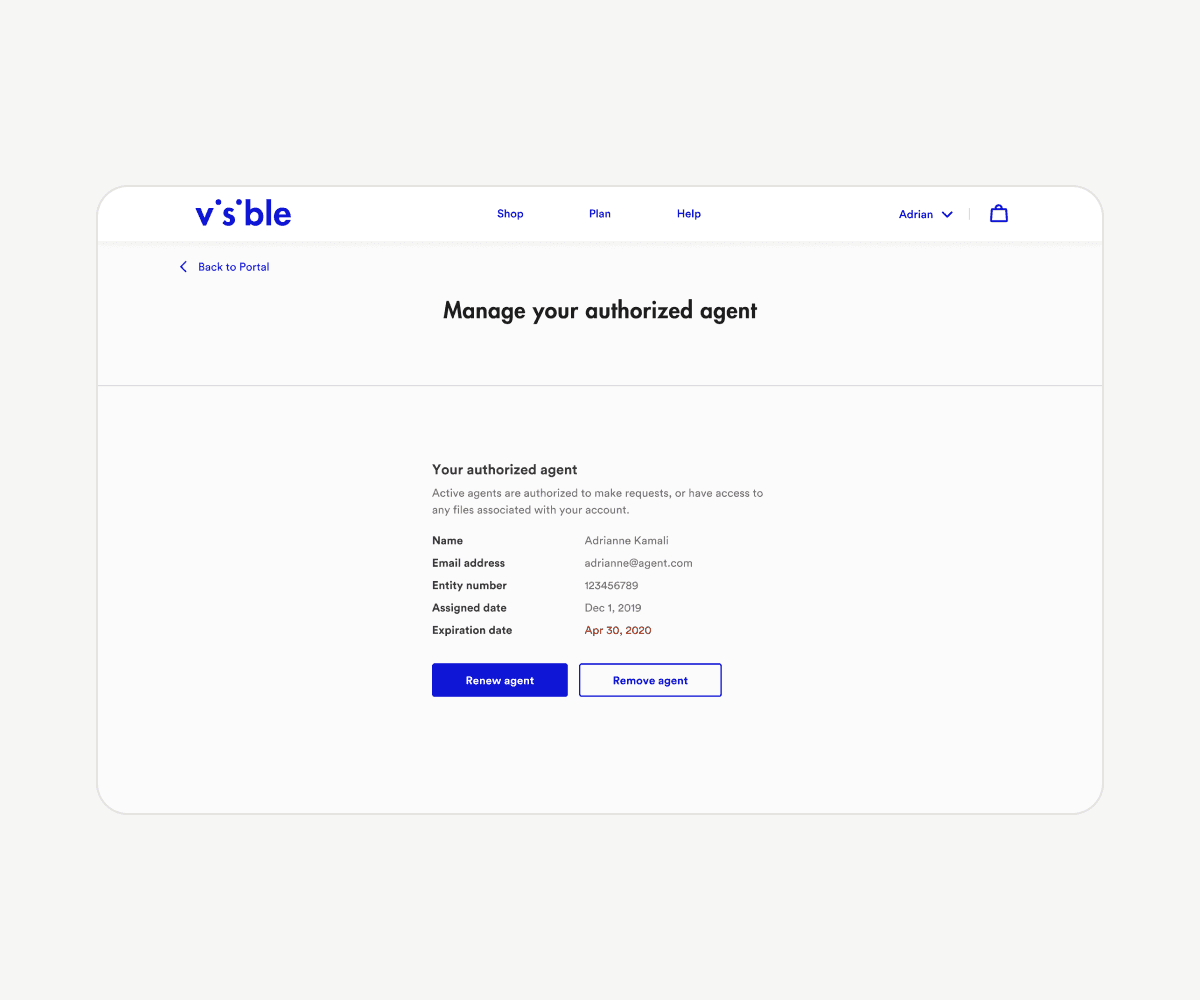
Every authorized agent and its status, at a glance.
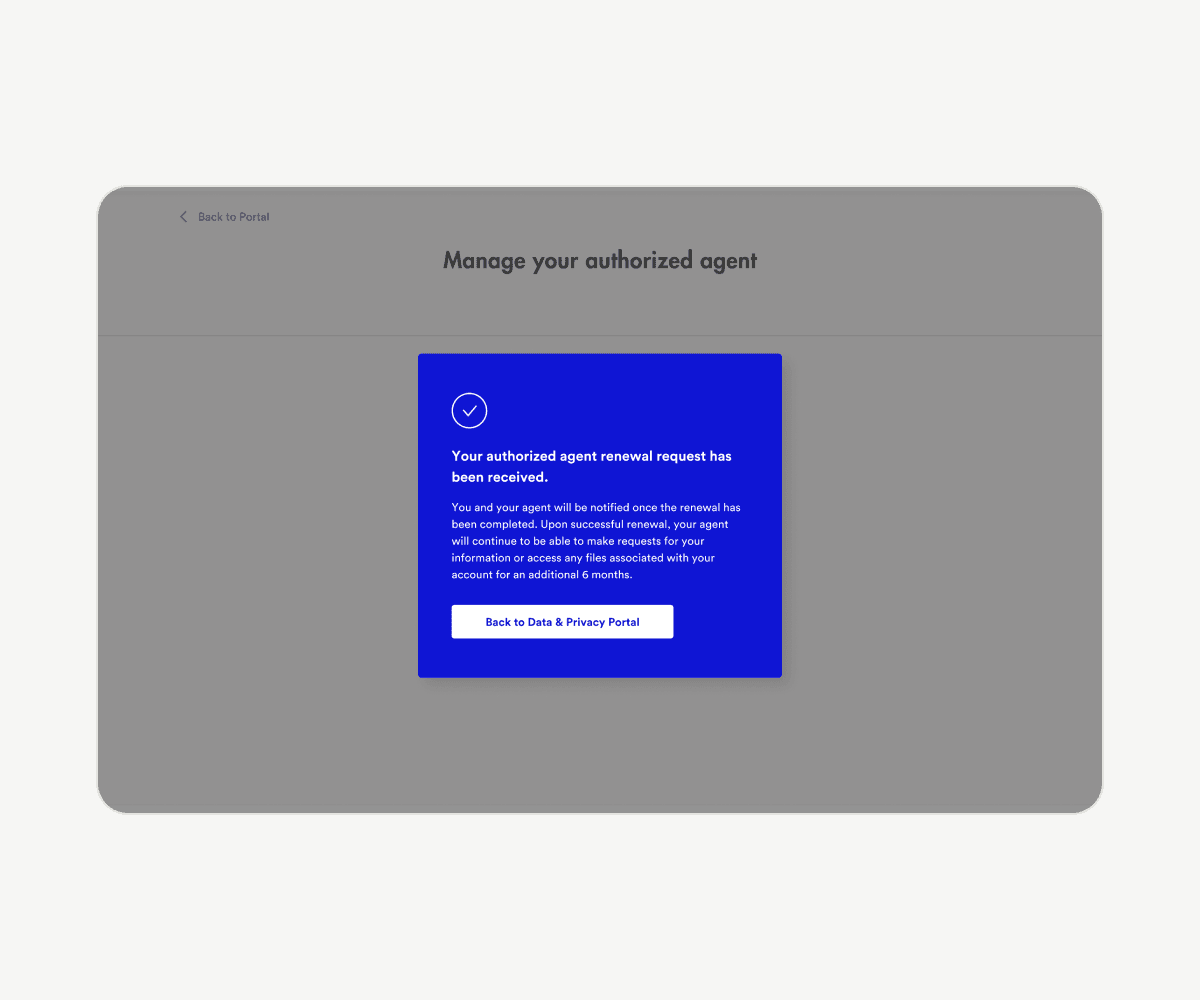
After a request, the screen says what happens next.
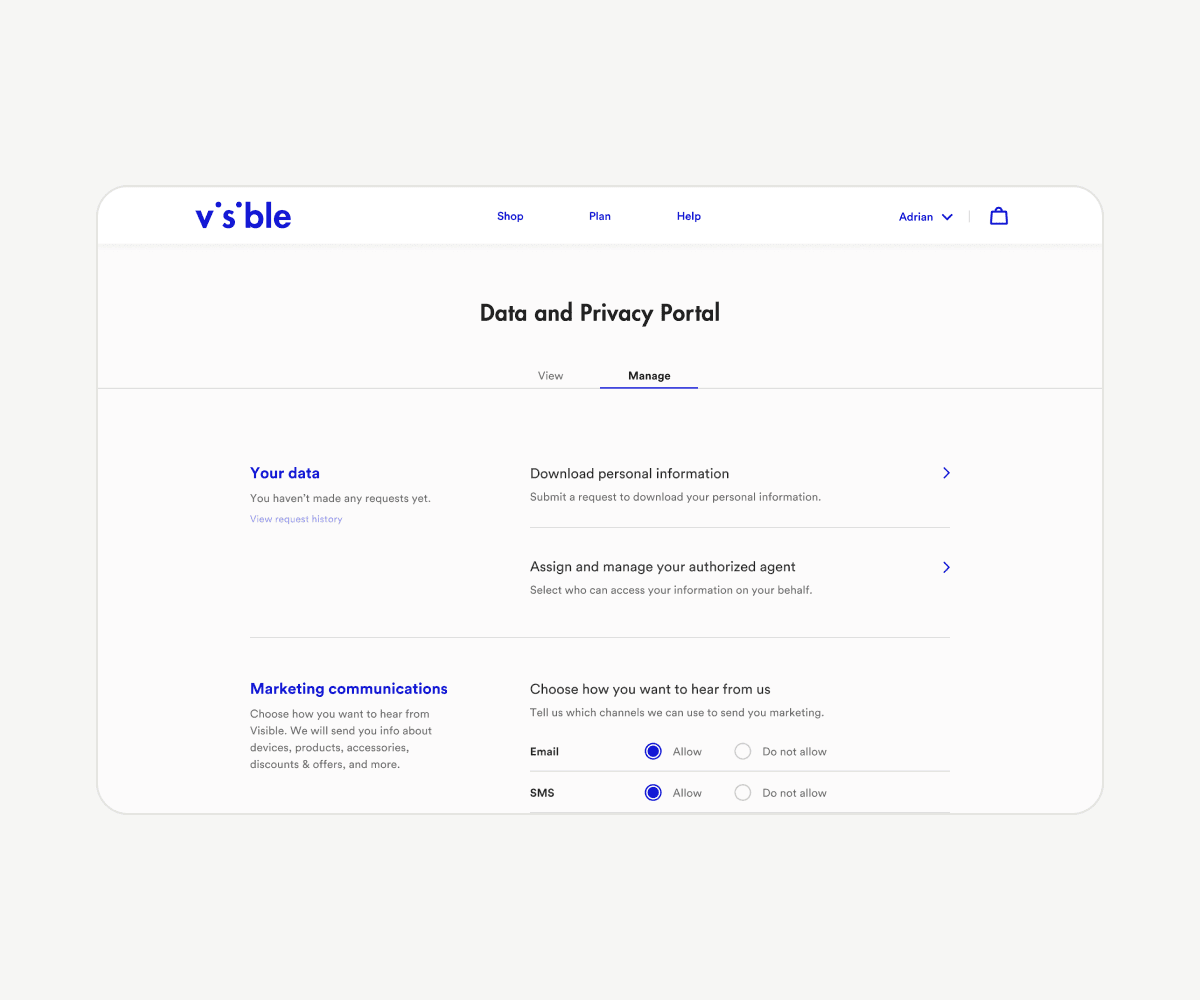
Plain allow or don't-allow choices per channel.
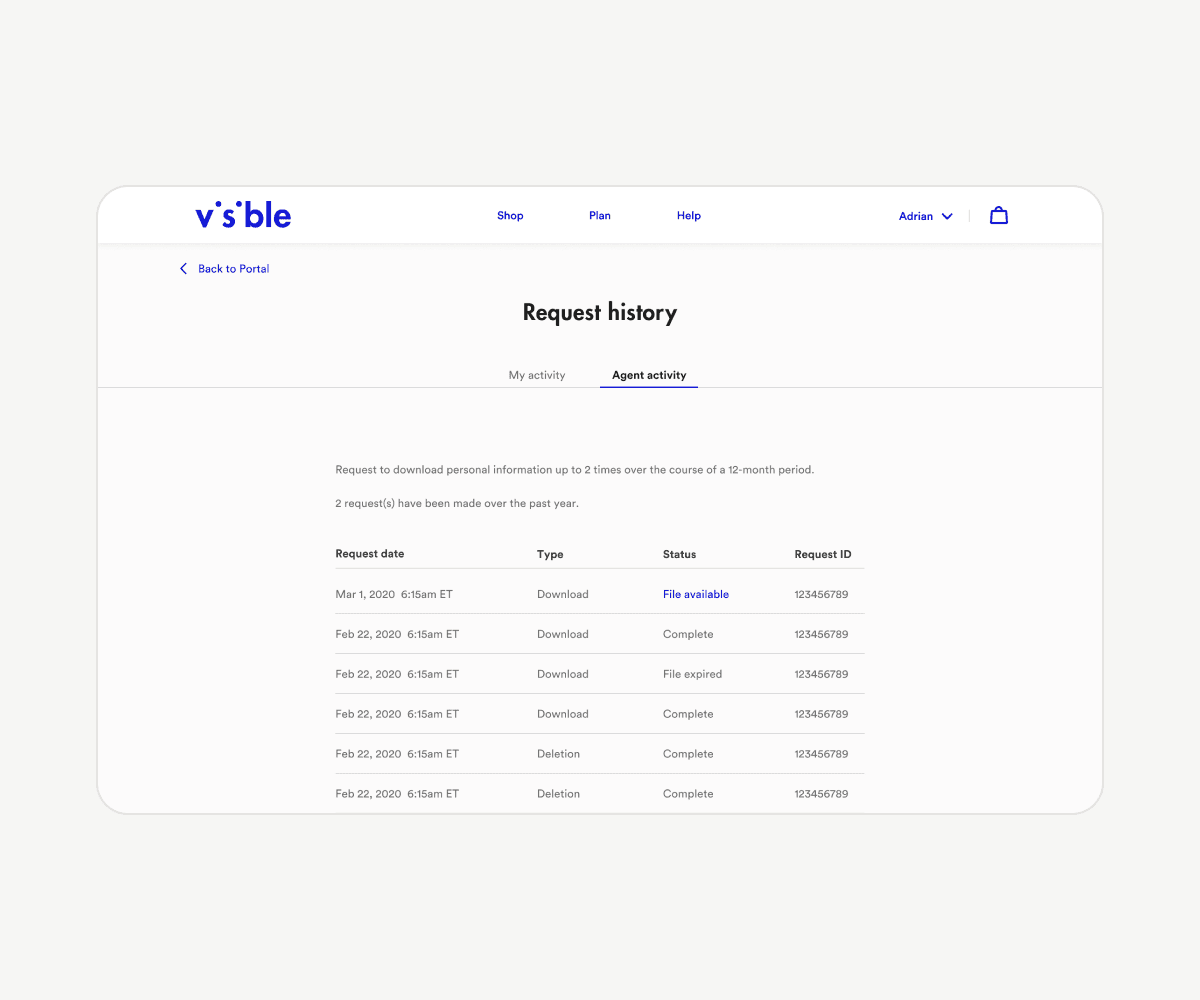
Download your personal information and review past requests.
Design landed a month early, giving engineering extra build time, and the portal launched in mid-December, a month ahead of schedule. After a live presentation, legal executives gave full sign-off.
Jason Ary, Director of Digital Product Experience, noted the project was time-sensitive with large legal and compliance implications, and praised the quality, communication, and professionalism of the work.
Skipping state verification removed a verification system and a third-party dependency.
Tradeoff: customers in every state get access the law required only for some.
Tied to marketing's trust push and to legal counsel's view that California's rules spread.
Tradeoff: a brand promise the product now has to keep.
Peak
Redesigned a telehealth startup's app, brand, website and internal EHR around patient trust, working directly with the founders.